
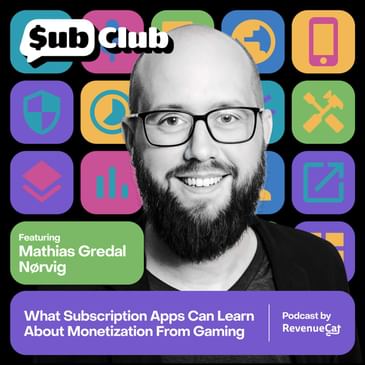
On the podcast we talk with Mathias about running Subway Surfers' marketing machine on salaries, not ad spend, leaving money on the table to protect player experience, and why more apps should try rewarded ads, season passes, and other tactics from gaming.
Top Takeaways:
🎨 Viral flywheels beat paid ads – A small in-house creative team can out-perform million-dollar ad budgets by feeding cultural trends and amplifying only what sticks.
🛡️ Protect experience over revenue – Leaving money on the table can strengthen trust and keep users coming back for years.
🎁 Reward attention, not just wallets – Ads and optional rewards let people “pay” with time, expanding reach in markets where subscriptions don’t scale.
⏱️ Seasonal models feel fair – Limited-time passes balance revenue and transparency, avoiding the “subscription trap” frustration.
🤝 Collabs compound attention – Partnerships with adjacent brands or IPs trade audiences and spark reactivation, often without cash changing hands.
About Mathias Gredal Nørvig:
👨💻 CEO of SYBO, the company behind the smash hit mobile game Subway Surfers.
📈 Mathias and the small-but-mighty SYBO content marketing team have built a freemium mobile app with serious staying power.
💡“How do we entertain as many players as possible with something as available as possible, but also allow those who want to spend … money to progress or get more content to do so — without the expense of ruining the fun for the majority?”
Follow us on X:
David Barnard - @drbarnard
Jacob Eiting - @jeiting
RevenueCat - @RevenueCat
SubClub - @SubClubHQ
Episode Highlights:
[1:01] Staying power: How a subscription app like Subway Surfers achieves longevity with over 4.5 billion downloads.
[4:30] Surfing the waves: How the Subway Surfers in-house creative marketing team creates and rides virality waves.
[8:50] The content flywheel: How subscription apps can become self-sustaining with organic marketing.
[16:27] Cash flow: What subscription apps can learn from the mobile gaming industry about alternative monetization strategies.
[19:51] Paying the piper: How to balance a good user experience with when and how to require payment.
[25:30] A watchful eye: The challenges of preserving brand reputation and protecting underage users in a freemium app that serves ads.
[28:48] Teaming up: Avoiding cannibalization and partnering with competitors in the free-to-play space.
[41:17] Day pass: How apps can experiment with consumables, day passes, and season passes to unlock new revenue opportunities.
David Barnard:
Welcome to the Sub Club Podcast, a show dedicated to the best practices for building and growing app businesses. We sit down with the entrepreneurs, investors, and builders behind the most successful apps in the world to learn from their successes and failures. Sub Club is brought to you by RevenueCat. Thousands of the world's best apps trust RevenueCat to power in-app purchases, manage customers, and grow revenue across iOS, Android, and the web. You can learn more at revenuecat.com. Let's get into the show.
Hello, I'm your host, David Bernard, and with me today RevenueCat CEO, Jacob Eiting. Our guest today is Mathias Gredal Nørvig, the CEO of SYBO, the game studio behind Subway Surfers, the most downloaded mobile game of all time with over 4.5 billion lifetime downloads. On the podcast, we talked with Mathias about building the Subway Surfers marketing machine on salaries, not ad spent, leaving money on the table to protect player experience and why more apps should try rewarded ads, season passes, and other tactics from gaming. Hey, Mathias, thanks so much for joining us on the podcast today.
Mathias Gredal Nørvig:
Hey guys, I'm happy to join.
David Barnard:
And Jacob, nice to have you as well.
Jacob Eiting:
I'm now here. Let's talk Subway Surfers, games.
David Barnard:
Yes, two CEOs on the podcast. These are always fun for me getting to be a fly on the wall.
Jacob Eiting:
If it happens like usual, I'll sideline, David, and just ask you a bunch of tactical questions for my own education, but I'll try not to today.
David Barnard:
Awesome. So I want to kick things off with the longevity of Subway Surfers. I think everybody in our audience will know what Subway Surfers is, so we don't need to talk about that specifically. But it is very unique in how long it's been popular. I think you just celebrated 4.5 billion downloads, which is just insane. And so I'd love to hear from you what you think has contributed to that. This is what all subscription apps would love to have, an all trails kind of thing where decades, Duolingo, you want to be this long lived, keep subscribers for a long time, keep people active. So I think there's a lot to learn from the longevity of Subway Surfers.
Mathias Gredal Nørvig:
Yeah, I think we came at the right time. There was definitely both a timing aspect where Bodie and Sylvester saw the need for a next generation runner. So Temple Run came out and designed the genre, but Sylvester and Bodie perfected it. So we can see that not only our 4.5 billion downloads and of course half of those are reinstalls approximately. We could see that their formula of the three lane mechanics, the swipes, the curvy lift, leaning horizon, all those things have become the formula for all other runners. So I think combined more than 15 billion downloads on that formula.
David Barnard:
And I think in recent years you can't hardly get on TikTok without seeing Subway Surfers be part of these viral TikToks. How has that played into and what other strategies have you worked on over the years to keep it fresh and relevant?
Mathias Gredal Nørvig:
I think early on the guys came up with the world tour, which was a way of every three weeks going to a new part of the world and inspiring people either to see their own hometown, or a nearby town, or a part of the world they had hadn't traveled to. So I think that helped us keep fresh. And then I think the intuitive gameplay means that new players coming in because you have to imagine that in 2012, this was a game from adults to adults. But then everyone that have started playing since also play Subway Surfers. So now we know that also a lot of kids are playing the game, but it was never designed for them and it is just a product of a really good and intuitive game that can also be played by everybody. It starts capping off at 45, 50, then people think it gets a bit too twitchy and a bit too hard to move the fingers, not judging. But I think overall we've been able to stay evergreen first and foremost.
I think we are in that bracket of Angry Bird, Subway Surfers, Candy Crush, all from the Nordics, funnily enough. And then I think the founders very early on said, it's about longevity. We want to be a truly free-to-play app where you can play the co-run as much as you want. We will never pinch you, we will never guard you from content. Anything is achievable through playing. And then I think that, as you say with TikTok, we've become a cultural phenomenon as well. So we can see that when Jimmy Fallon mentioned us on Tonight Show as an example of how you make sludge content. When Justin Bieber tweets us or the last week tonight, John Oliver mentions us that those are things that other companies would pay for and we're having the luxury of being mentioned because they think that this is how you do TikTok or this is how you work on virality.
David Barnard:
How have you all leaned into that aspect of things? I believe I read that you've made it very clear that folks can use your IP in video and you're not going to come after them and things like that, but are there any other ways you've leaned into that virality?
Mathias Gredal Nørvig:
So we've always had a strategy of producing content that could be used for UGC. So every user generated asset is also amplified if we think it's cool. So not only do we allow them to do it, we also share it afterwards if they do something cool. The team is also very autonomous. So we've had a very proactive team for many years that have managed to make several viral ways where we could see that the audience really is picking up. But I think in my 12 years running this studio, I came the year after launch. I've said no to the marketing team twice. And they produce what? 5, 10 assets a day. So there has been very few instances where I said maybe this is too much.
Jacob Eiting:
There's often very little downside to it, right? If something's bad, it often just doesn't go anywhere and nobody sees it anyway, right?
Mathias Gredal Nørvig:
Yeah. That's also why I like what they're doing. A cool example was we had Rami, the hall of famer, who also happens to be the keyboard player of Foo Fighters produce the soundtrack for one of our cities. And I had agreed with him that, look, we use this picture and we know how cool you are as a musician, we're super honored it that you wanted to jam with our in-house audio designer. But then the team said, "Oh, we also want to make this video." And since it's a video that I didn't know how would land with Rami, so sending a text to someone saying, "Look, I know my team is super creative, but I don't want to step on anyone's toes and I admire all the creative work you've done and I don't want to come off as overly sassy by sending something that just pisses anyone off." Thankfully he loved it. But sending a video where you're not really sure was meeting the two worlds of our professional partners and the in-house creativity. That was one of the more fun texts I've had to send in the last month.
Jacob Eiting:
You said in-house, that answers my question, but is all of your ad creative and marketing creative done in-house?
Mathias Gredal Nørvig:
Yes. It's basically a constant flywheel, like a furnace just spitting out things. They brainstorm, they remember to keep a balance of in-game relevant material, which means that we don't want just to create virality and then people don't know where it comes from. Some of the viral videos we did in the past basically was just the team having fun, which generated 100 million views on a video, but people didn't know that this had anything to do with Subway Surfers. It still helps us with the algorithms because of course they can see which account it comes from and they know that that account is tying to this thing. So when I speak to Apple and Google, they also acknowledge that part of the algorithm is of course also seeing what works on other platforms.
So if our content works on TikTok, we are also featured more on our app stores. But the gameplay relevant material is still very important so people see the game and don't just associate us with being funny viral. The other content is basically just riffing off of everything that's coming. So whenever a TV series goes global, we also did the honey cake from Squid Games as a Subway Surfers logo. We do The Last of Us that we do a take with our characters and we constantly try, and when I say we I mean the team, to just ride the waves of virality because we are one of them. We also have a swing at the Duolingo every now and then, they have a swing at us.
Jacob Eiting:
I was going to mention, it's very similar to Duolingo's strategy, right?
Mathias Gredal Nørvig:
Of course.
Jacob Eiting:
It's in-house, I kind of think I knew the answer to that. Because you just can't outsource, creative agencies can't take risks with the brand. There's no incentive for them to do it and it's just very difficult if they don't have buy-in from whoever this key brand stakeholder is.
Mathias Gredal Nørvig:
We had a new person joining the team. We just bought the mascot costume for guard that chases you in the game. And she did a dance with that costume. And I don't know if it was her very first video, but basically one of the first videos she produced had 75 million views.
Jacob Eiting:
Jeez.
Mathias Gredal Nørvig:
And that's a really tough start to beat because of course everyone was like, "Oh, make one more."
Jacob Eiting:
Yeah, right.
Mathias Gredal Nørvig:
Then fair to say, she could say make another game. It's super hard to make successes-
Jacob Eiting:
Much like games, content for games is a hits-driven business, right? It's hard to get lightning in a bottle twice.
Mathias Gredal Nørvig:
Exactly.
David Barnard:
What does that look like on the paid side and how has that evolved over the years? Are you putting money behind these UGC things? Are you paying for brand? Are you doing playable ads and things like that? What's the paid strategy behind the kind of brand and content flywheel?
Mathias Gredal Nørvig:
The short answer is that we spend nothing. We spend salaries-
Jacob Eiting:
Wow.
Mathias Gredal Nørvig:
... so it's all organic, but it's also fair to say that we use various small budgets to boost things when we see that they go viral. So we do amplify it, but we're talking tens of thousands of dollars. We're not talking hundreds of thousands or millions of dollars. We're doing it very strategically, when we see that some content picks up, then we might put a few hundred dollars behind it.
Jacob Eiting:
Just to create other opportunities for it to go viral, right? Get it front more people.
Mathias Gredal Nørvig:
Exactly. So it transcends different platforms, because of course if you see it on one platform, then we see that this content could perhaps ignite on other places.
Jacob Eiting:
So bring it over to Instagram and then spend on some ads to get it to go viral on that platform as well. That makes sense.
Mathias Gredal Nørvig:
But in general, the flywheel runs by itself. It's simply just them producing things and also Justin Bieber makes a new album. They make a post where the guard says that the Justin Bieber got me in a chokehold for his new album. And then he posts that and the first thing some media does is Justin Bieber hints new collab coming. And of course, we just sit tight and don't comment because it's not our business to correct it. Who knows? We would love to work with Justin, he should just reach out if he listens to the podcast, but-
Jacob Eiting:
It could be in the works, it's just a very early stages.
Mathias Gredal Nørvig:
Exactly. We're up to play, but it's just to say that those things also live in a world that is somehow out of our control where just the fact that we are viral gives us the ability to serve more content. But we also really have to protect the brand so we don't end up just becoming fat sounds and whatever is trending that month. So we didn't go all in on Skibidi Toilet even though quite a few brands did. Right?
Jacob Eiting:
Is there one person there that is the arbiter of when fart sounds is too much? Is it sort of like in the culture, who's guarding against that jumping the shark?
Mathias Gredal Nørvig:
We have a couple, so I'm probably the ultimate, pun intended, I'm the ultimate boss to beat if you want to get through with fat sounds. But in general, Christian running the team is doing a great job. But I also know that he's passed with both his peers and Celia, our head of PX play experience, as well as Adam who is currently our head of brand. They're both doing phenomenal job of saying, this is on brand, this is too much.
Jacob Eiting:
Yeah, it's tricky to get in a world where people are allowed to take risks, but you also need some safeguards but you don't want the extreme of that, which is everything has to be by consensus. Because then you just get really bland.
Mathias Gredal Nørvig:
And that's also why I think even if you ask them, Celia and Adam, I think they would say, we don't often say no either. So it's not a vibe of approvals. It's much more let's brainstorm and then we see for example, Hyphen from a K-pop band post a video where he does the facial expressions to the sounds in the game. We've seen several constant creators do that. And again, people think, well, how much did you pay? And it's simply just that they think that this is a cool content piece to make.
Jacob Eiting:
These brands really become self-sustaining at some point. You think about Nintendo, or Mario, or something like that, they don't have to pay somebody to do viral things with the Mario IP, right? It really does become sort of self-sustaining. And I guess, something you mentioned earlier, you're not pinching people so hard. You almost have to have this very efficient content creation engine if you want to not have to pinch people to make the game playable and a great free-to-play experience.
Mathias Gredal Nørvig:
It's also because I think the founders originally didn't want to monetize at all. They just wanted a game that kept staying free and playable and therefore that would generate money. Of course, we have further ambitions now and the industry has also matured, so that would not be enough in the current climate. But we are definitely winning or gaining from just being an evergreen and seeing that we in the top downloads every year, we are in top five. We have been since launch. Every year there are a couple of... Not every year, we have also been number one. But in most years there are a couple of positions that are taken by companies paying, so that's currently Roblox and Garena Free Fire. They are above us and they're paying for their traffic, they're making a lot of money, all good.
Then you see the occasional, the yearly trend, so you had among us, you had the Piano Tiles too. Then you had another game that people remember very well from that year, but they're out the next year of top 10. And we are still third or fourth and that means that every year we're also gaining because either the spenders will stop spending or the one year peaks will go out, but we are the evergreen that keeps giving.
Jacob Eiting:
It's much better to be in position three not spending to be, than to be in position one or two and having to spend a lot to be there, right? In terms of a business which margins aren't everything, it's a much more enviable position.
Mathias Gredal Nørvig:
Plus then we see that, for example in the Mario movie, not a lot of people realized that they actually also made a reference to us. So in the early scene where they flood the sewers, the newscast starts explaining that this also affects the subway surfing. And again, that's just a little love from some writer that had fun saying that this is a game, let's give love to the industry and we like to do the same the other way around.
David Barnard:
I love that you said we don't spend much except for on salaries. Because a lot of people, I think, do confuse the kind of UGC and organic go viral kind of stuff. You're still spending on marketing, you're just not spending on paid the way we typically think of it. But I would imagine you have a pretty big team, so you are spending quite a bit on salaries and have a big team running this. How do you think about balancing that and how big you grow the marketing team and that sort of thing?
Mathias Gredal Nørvig:
So marketing for us is several things. There's both platform relations, and growth, and content, and player support, and so forth. The core part producing content is less than 10 people.
David Barnard:
Wow. It's almost like you have a large team.
Mathias Gredal Nørvig:
But they are super nimble and very efficient at producing. And therefore, I still think that we have fair salaries, but it's just to say that it's not because we're then spending a full paid marketing budget on 10 individuals. They are themselves growing with both the creationary process as well as the virality training. We had a really great talent with us for several years and when he left I remember thinking that how much is in him as a creator versus the strength of the brand or the virality. And the team definitely had to sort of readjust, okay, these were some of the ideas that he would bring. What new ideas are we bringing? We managed the transition and of course that's a nice feeling for me as a CEO that we can build on regardless, but it's definitely also talent driven. So both the people that have helped us along the way and those that are helping us now are worth their own weight in gold.
David Barnard:
That's an incredible achievement with 10 folks on the team.
Jacob Eiting:
I don't think you can have much bigger than that. Like on Mad Men, Don Draper didn't have 50 people in the room helping him co-write, you know what I mean? For creative processes like that, it really goes sour the bigger the group.
David Barnard:
Well, I wanted to transition and dig into the monetization side of things. And apps I feel like still have so much to learn from gaming. We do have examples like Tinder with the consumables, and multiple subscription tiers, and things like that. But I still feel like apps are behind the monetization curve from what mobile gaming has done this past decade. I'd love to dig into how you think about monetization and then especially, as you layer on different levels of monetization. I know you have ads, and then in-game currency, and multiple in-game currencies, and other IAP offers. And there's a lot of complexity that have been layered in there. So I'd love to start just at a high level, when you started monetizing, what was the thought behind it and how did that evolve over time? And then we can dig into the specifics of the economics.
Mathias Gredal Nørvig:
Very early on, as I say, the founders of SYBO, Sylvester and Bodie, believed in having a very simple just pure game experience. And that if people kept playing that, they would watch some ads, and by watching ads it would pay the bills. The discussions we had with the publisher for the first eight years, Kiloo Games in Aarhus were much more on the side of them saying, "Well, we could also put in these things." But they also generally liked the approach of a truly free game that could monetize through ads. Because we've been live since 2012. It also means that we cannot be as sophisticated as you see some of the other games because that would alienate a lot of the older players that basically just like the way the game works today.
So we just this morning launched the biggest mobile collab I think ever with Brawl Stars where Brawl Stars visit Subway Surfers and Subway Surfers visits Brawl Stars. And that's one way where we can say, "Look, you still have the co-run to yourself. It follows the environment of a Brawl Stars universe, but in a month's time we will visit a new city." But the game mode that we do with Brawl Stars is a way of also seeing how are the players actually engaging with us, both playing with other IPs as well as trying out game modes that are so clearly an event for duration of time to see if that scares away people. Do they stop playing the co-run? How are they engaging with the PvP mechanic and does that allow us to monetize those players in a different way than they are in the game?
Because Subway Surfers obviously is constructed in a way where if you play for an hour without dying and you shut down the app when you die, then you haven't paid anything for your entertainment. And I think in the future at some point we have to figure out what do we do with that because that's unfair to the players that die a lot that would then see more ads, because they would probably feel that the experience is worth where those that play five hours perfectly would actually not contribute to paying the salaries of those who make the product. So it's a constant sort of balancing act of saying how do we entertain as many players as possible with something as available as possible. But also allow those who want to spend time or want to spend money to progress or get more content to do so without the expense of ruining the fund for the majority.
David Barnard:
I read an interview you did that somewhere between 80% and 85% of revenues still to this day comes from advertising. Is that correct?
Mathias Gredal Nørvig:
Yes.
David Barnard:
Wow.
Mathias Gredal Nørvig:
So it's a mix of interstitials and rewarded videos.
David Barnard:
How do you think about those rewarded videos? This is something I've wanted to experiment with and I feel like I've seen some subscription apps experimenting with this. But it is such an interesting mechanic to allow somebody to pay with their attention versus paying with money. And it's something that is very common in games. Again, I can't think off the top of my head any subscription apps that are doing this. But how do you think about that mechanic and how do you think about that not breaking the game or alienating users? Like you said, you kind of already alluded to it that if you could play for an hour and never see an ad that maybe that's too much, or 10 minutes or 5 minutes is too little. How do you think about not completely breaking the experience with those rewarded ads and what maybe subscription apps can learn from that?
Mathias Gredal Nørvig:
I think the conversations we have around monetization regards the fairness. When is it fair to require payment and whether payment is then through a reward video, or a subscription, or a premium feature, or an in-app purchase. There is no right answer. Especially when you have a player base like us of between 100 and 150 million people every month, we know that we're not talking to a player persona, we're talking to all types of players at all times in all markets. And that means that for me, what the ads allow us to do is to also be available and support markets that would not traditionally have subscription apps or use in-app purchases. So tier two, tier three, where most other big brands would not advertise and therefore not have a lot of downloads, we are still the most downloaded games in those territories.
But specifically for the US and for tier one for Europe and for the higher earning countries, of course, we would like to have a share of wallet and to know that if you're paying in all your other games and you think, well, it's nice over here that it's free. We would love to share with you the characters or the unlocks that would convert you and share, take part of the salary payments here in the business of SYBO. So from that point of view, it is definitely an ongoing conversation. Where do we have the real estate on screen to show a banner or launch a reward video, and where do we actually allow if you've spent money in the game to remove some of the interstitials. And whether that should be permanently or whether that should only be for a period of time to say, well, if you paid, then you won't have any distractions that you haven't chosen yourself. And those types of balancing acts are ever ongoing.
Jacob Eiting:
You used the word fair, which is I think what a lot of developers do implicitly when they're thinking of pricing, they're trying to be like, "Okay, what is a fair price?" In this case, you're not talking about dollars for software, you're talking about attention and exchange for software as well as blending that into dollars, which is really challenging. And one of the reasons that app developers have avoided this, I think one is the market has not been primed for it versus gaming. It's been like this since as long as mobile gaming is a thing. It's complicated, right? It's complicated to blend. You have an ad network and there's a third party driving that. And then you're figuring out how it fits into your experience. And then, of course, you have your own monetization.
Something you mentioned that kind of highlights how challenging this is, is only showing ads to somebody when they die. Probably your best and most engaged and maybe the most likely to pay people are the ones who don't die. So you've actually completely blocked off monetization from them. So yeah, you have to figure out how can and what can we sell them. And then to some degree, another thing they bring to you, which not necessarily their attention, but it's their word of mouth. And so if you're extracting from them, are they going to be as likely to share you on TikTok and get you your next 10 users?
Mathias Gredal Nørvig:
And 13 years and we still have a million daily new installs. And as I say, half of those are reinstalls, but that means that it's also worth for us to keep the content furnace and the virality going and not jeopardize it by trying to extract too much value. I think that's part of the discussion we have is that okay with these feature we can try these new mechanics with the co-run, we want to keep it clean. But then of course, we see more and more game companies saying, well now you need a short break from the game, we'll show you an ad. And that helps pay for the business that serves this game to you. I actually think that's fair as well. I have a nine-year-old son myself. When he watches an ad, I'm also explaining him that this is the way that we pay for that game. Entertainment is business. No one goes to the cinema and doesn't expect to pay.
So the fact that ads came in and I know that that annoys some people, the premium segment that just would like a core experience from the story driven sort of A to Z, that's fine by me. I like the fact that in mobile gaming you can actually play a lot of games without spending and you use a part of your time to watch games. And then the playable ads are now so fun that people actually also sometimes just get stuck in playing a quick level of some other game trying to advertise now.
David Barnard:
I got stuck in that loop yesterday. I was playing Subway Surfers because I know we were going to talk today. And one of the playable ads was so fun. I spent probably five minutes playing the playable ad and then came back to the game. But I am glad you brought up your nine-year-old son. How do you think about protecting your brand in the ads that you serve? I had a freemium weather app and I ended up removing ads because I was having so much trouble filtering. I would get comments, bad reviews on the app store, emails to support saying, "Why are you showing ads for guns?" And I'm like, "What the heck?" And I'm going into Google AdWords and trying to turn off all the, make it as age appropriate as possible. And then I get another one, why are you doing gambling ads? Because it would have the slot machine ads and I'd go and try and figure out how to turn that off. So how do you approach keeping those ads brand safe and kids safe since so many kids are playing the game?
Mathias Gredal Nørvig:
So we're doing two things and now it gets a little technical. But obviously, when you install the game you show your age. And if you are younger than the legal age in your country, then you get placed in what we call the COPPA segment. Depending on the country it's 16 or 13. And if you're in the COPPA group, then you are only served COPPA ads and it's only certain ad networks that have COPPA groups. So they are not showing anything that would not be COPPA compliance. But even in the adult version, if you say that you're older than that age, and I'm saying you should not be able to see ads for gambling, for guns, for pornography, for anything that is R rated. And that's because we don't believe that that's the way we should be making business. When I say should not, it's because of course the ad networks sometimes make mistakes and when you're a show of a billion impressions a month as we are, then of course I'm sure the viewers of your podcast could come with an example of, "Well, once I saw this ad."
And we would actually actively go into that network and say, "This is a mistake, remove this because we have heard from a player that this ad was shown." That's not how we want to make our money. So we are also very proactive in the sense that we've blacklisted a lot of categories that should not be shown. We've done all the COPPA compliance and GDPR compliance. And then we also make sure that if anyone says I was shown this, that we also flag that to the ad networks.
Jacob Eiting:
Yeah, I was going to say you must have a team that's just dedicated to, well, one responding when a customer writes. But then figuring out what ad networks you are and aren't working with and what's your obviously expectations for yield and stuff like that. But it must be a substantial amount of effort.
Mathias Gredal Nørvig:
It's a very efficient system and we have very few complaints, so we actually are not a lot of people doing it, but they do it really well. And then I think because we also have SDKs in the game that allows us to show what ads were they shown. [inaudible 00:29:00] that shows us that these were the ads that people engaged the most with and these are the ones that they didn't.
Jacob Eiting:
Are you seeing this outside of the ad network's own analytics, you all are tracking to what ads are performing the best?
Mathias Gredal Nørvig:
Basically which ad is prompted.
Jacob Eiting:
Okay, yeah, they can be very kind of black boxy sometimes with how the auction resolves and all this stuff.
David Barnard:
Yeah, that was my problem. And then how do you think about-
Jacob Eiting:
And you're a team of one, David.
David Barnard:
I know.
Jacob Eiting:
Yeah. It's challenging.
David Barnard:
It was so challenging. I just gave up and pulled it out. But the other thing I found really fascinating, as a weather app developer, I download a ton of other weather apps and check them out. One of the fascinating things there is you will see ads for other weather apps in most weather apps. So how do you think about and prevent cannibalization like me yesterday I spent a minute or two playing this other game that was prompting me to go to the app store and download that game instead of Subway Surfers. And so, how do you think about that aspect of cannibalization that you may lose a player to this other game that was advertised inside Subway Surfers?
Mathias Gredal Nørvig:
That's the business of rich play, so we know that the cross promotion or the potential cannibalization of an ad prompting you to leave is a risk. We treasure the work that the ad networks are doing to make money for us. But of course, sometimes they do it so well that we also see our attention drop a bit because David chooses to go into another game that he finds more funny. Our confidence in our product and also the longevity that we're proving means that we are also confident that you will come back, that you in your next play session sit down and don't join the game you download necessarily, but you remember why you play Subway Surfers. And why it's one of the games that you remind yourself of when you're in the subway, flying somewhere, or on a bus with no connectivity. Then you're like, that's the game that you open.
But it is definitely the thing that we have had two instances of very direct sort of competitive titles. Just when Subway Surfers came out, Zynga did a game called Running with Friends, which was a complete copy. It was a bull chasing you in Pamplona instead of the guard, and we were actually quite not afraid, but aware and concerned that what does this mean to Subway Surfers if one of the big games come in and just sweeps the market. But it wasn't as fun, so it went away quite quickly because people could tell that Subway Surfers and Sylvester and Bodie had cracked something about the tactility of the game and some of the intuitive nature of it that cannot just be copied page by page but needs specific sort of metrics that we keep as our secret sauce.
And then we have King came with Crash Bandicoot, which we knew that they wanted to make a runner that would monetize. They had put one of the best teams on it, the IP is known, the game looked amazing. And they did a very hard monetization. And we thought, this is interesting because of course we would also like to do a runner that monetizes. And if they came in and took just half of our downloads but made $2 per player, then that should have been us. Right?
Jacob Eiting:
It's a good experiment for you to watch, right?
Mathias Gredal Nørvig:
Yeah, and we actually had the talk, should we tell the ad networks that please don't show ads for Crash Bandicoot because that's probably the only game where we don't want people to then get excited and leave the game and then find something that was then better to sign for monetization. In the end, we actually didn't do anything and it turned out that, again, Subway Surfers is just the gold standard, epitome of a runner.
Jacob Eiting:
Crash Bandicoot is his IP, I kind of think Subway Surfers might be a little more relevant in 2025.
Mathias Gredal Nørvig:
That's true. That's true. That's not me. But [inaudible 00:32:41] say that we're super happy that we are still the go-to runner. We consider ourselves the king of runners and of course, we hope with future launches that we have other types of runners than just the Subway one.
Jacob Eiting:
Can I ask you, you talked about this, you just launched today this promo with Supercell and Brawl Stars. Yeah, that's a classic example of you can't play both games at the same time. So I'm assuming we won't get into too much specifics, but how long does a deal like that take and how do you think about approaching those and working with other companies and stuff like that?
Mathias Gredal Nørvig:
The initial exploration for deals like that usually start a year before, at least a year before. It starts with a high level concepting and sort of these brands would be cool. We also did it with Crossy Road. We've just done it with 8 Ball Pool, which is of course part of Miniclip family. And we have other ideas for the rest of year or next year. The concepting is sometimes challenging to explain because what is concepting? Well, that's a guy throwing ideas up on a whiteboard that eventually sparks the interest of a partner that says, we want to do that with you. How do we make it happen? Then you put engineers, and legal, and everyone.
Jacob Eiting:
Do you just start sending them ideas or do you get to one of your creative people and one of their creative people in a room? What's the process?
Mathias Gredal Nørvig:
I carry a lot of the outward BD, so the business development side. I attend conferences, I speak from stage. The mobile space is a relatively small industry, so we also know each other.
Jacob Eiting:
And you're all in the same five countries. So it's helpful.
Mathias Gredal Nørvig:
That helps too. It's a short flight to Finland. But it's also from the friendly atmosphere. We don't consider each other competitors because we want people to enjoy games and if they're playing my game, they'll also play yours and they will come back to mine if mine is still fun.
Jacob Eiting:
Yeah, it's much less of a finite set of customers like B2B can be, right? There's only so many companies in the world.
Mathias Gredal Nørvig:
Yeah. I think the weather app is actually a good example because you might only be using one weather app. And then if you really have a wedding or around birthday, then you might check two apps. But you have a habit of only opening one once a day to check which clothes you should wear, where games is much more of a fluid activity during the day. And if you are going on the bus on the metro Subway Surfers is likely one of the games that are open because you lose connectivity sometimes. But if you sit at home and you bring out the console, then we also know that we're not people's primary game. We are the game that they play in between the other sessions because they spent money and time in GTA, or Call of Duty, or Sims and then they play Subway Surfers before falling asleep or because they have time in between sessions.
So I think from that point of view, we can also allow things to be a bit more freely. And therefore back to your question, a year before when we start pitching high level ideas, it's not very concrete. And then as the team start working together, of course it becomes more and more concrete. How willing are we on each side to do something in our own game or is it more of an activation for the other title? And with Crossy Road, it was a very sincere collaboration. It also has been with 8 Ball Pool and Supercell. Because the teams on both sides are excited to work with the other IP and we see a huge overlap in players that knows both titles and are excited to see what does that look like in the game I play. I also know the other game and I also want to try that out. So we think there is a lot of also reactivation of players that would come back just for the fun of it and see what does that look like in the other game.
Jacob Eiting:
Are the deals fairly standard? Is a lot of time spent on the business economics of it or is there a pretty standard understanding of what's industry norm?
Mathias Gredal Nørvig:
Actually these deals have been pretty bad, so we're exchanging traffic where we're saying, look, if we send players your way and you send players our way, then what you monetize and what we monetize is different, but it boosts both of our numbers. So we actually haven't made commitments to each other than delivery of quality assets.
Jacob Eiting:
Just kind of what you're going to do and whatnot. I guess, it makes sense. You kind of mentioned that both brands have to work with each other. You almost have to be somewhat co-equal, in sense for it to be interesting for both parties. I've always found that with partnerships generally is that if the parties aren't of somewhat equal size, somebody gets crushed, or somebody's uninterested, or it is just very difficult. Not for any reason, it's just kind of happens that way.
Mathias Gredal Nørvig:
We have a lot more downloads than Crossy Road, but Crossy Road did an amazing effort in their game to integrate Subway Surfers, so I know that they got a bigger bump in their downloads than we did in ours, but it didn't feel unfair. And I think it actually also helped with the virality of both games in the long term that you just see games that love each other and teams that love each other.
Jacob Eiting:
Just to get their IP and your IP is positive.
Mathias Gredal Nørvig:
And with Brawl Stars specifically, I know that they make a higher LTV than we do. But that's also their day-to-day, so it's not as if we're coming in and tripling their LTV, but they will probably make more money per player than we do also after this game. We just like that we can create something cool together that is authentic and native to the brand.
David Barnard:
There's something I hope we see more of in the subscription app space. Strava just bought Runna. And when that initially happened, when I saw the news, I was like, "Oh, that makes a lot of sense. They're just going to integrate the running features and what makes Runna, Runna into Strava." But no, it doesn't seem like that's a strategy at all. They bought Runna and now are pushing people back and forth between the two apps. And Runna is a great brand in of itself and they're working together like that. In that case it was an acquisition, but I hope to see more of this amongst those kinds of apps where there's... With that one maybe there was a little bit too much conflict for them to not buy and just do a partnership.
Jacob Eiting:
Or it might actually be easier depending. Sometimes BD can be just difficult, maybe it's just easier to buy the company.
Mathias Gredal Nørvig:
It's a meeting of minds. When we have these meetings, also the partnerships we haven't announced, it's just exciting to see the creative teams hitting it off together. And then seeing that what comes out excites people. We've gotten a ton of love of people saying, "Wow, we can't imagine you got Brawl Stars." And we're getting the same feedback from our Finnish counterparts at Supercell saying, people saying, "We can't believe you got Subway Surface." So it's also just a synergistic sort of one plus one equals three, right?
Jacob Eiting:
Yeah. The music industry figured this out a while ago is that just collabs help. If you can get more names on a track, it just almost only upside to bring in other people's fans and trade the music back and forth. And it is a similar economy, it's an attention. There's much more elastic demand I feel like in attention than in a lot of different categories. And which is maybe why we haven't seen it in apps so much because for a utility you're feeling a niche and there maybe is only, to your point about weather apps, there may be only room for one or two apps in somebody's life.
But as apps become... We're in this phase right now where apps are just proliferating at an incredible rate into more and more niches that might be become less true, right? As the niches become more narrow, then suddenly you can collaborate between adjacent niches. I think the hard part will be gaming is a decade ahead of apps. It's kind of wild.
Mathias Gredal Nørvig:
Always.
Jacob Eiting:
Yeah. Considering we kind of both started at the same time, I guess gaming, maybe you could count the Nokia days as a head start. But it always feels like apps are just a little bit behind and we're still figuring stuff out, so maybe it's a good thing to just look and see what y'all are doing and expect that we'll be there in a decade.
Mathias Gredal Nørvig:
Gaming has been at the forefront of monetization since. And I joined the industry in '13. It's an amazing industry to follow and of course sometimes people also take it too far. Right now with apps in general, I think I see the trend of, of course, subscription is the best way to monetize. It also sometimes feels annoying that in order to scan this document then you have to keep subscribing to some utility app. And then eventually, of course, Apple and Google allows another app that is free to do it. So the notes app allows you to scan, and a lot of people know that, so they still subscribe to some scanner app because they had one document they had to send to the state.
So I think there is definitely also a longevity factor for apps, especially utility apps or apps that serves a specific thing where I would as a payer prefer to the premium model or a yearly model that is more fair than right now. Where you feel like everything is $100 for a year of using something that is like, yeah, but then it means I cancel. If it was priced more friendly to the consumer, then people would actually perhaps not cancel it. That's the balancing act that games, because it's been so massive for so many years and we have so many people are players. It's also found its equilibria in the different aspects of this is what players are willing to spend. Where I think apps for me in some aspects I end up spending too much because I have one day's need of something. And therefore, I don't become a user of other than the Stravas of the world because you're a runner or because you do these things.
David Barnard:
That's actually where I wanted to take things next is, and again speaking of being so far ahead of the app industry. The idea of a season pass in apps and all the in-app purchases and the rewarded ads. All of this hybrid monetization, I think we will see the industry start to adopt over time where, "Hey, you just need one scan? Okay, five bucks." Just make it happen and you're done. Or Slopes is, we had the founder of that on the podcast and he now does a season pass. It's like, "Hey, if you want-"
Jacob Eiting:
A season pass, day pass, they do a bunch of buy as little or as much as you want.
David Barnard:
But then they also have, to your point, they have this subscription for people who are avid skiers and who are going to go out six times a year or whatever. And so they're a good example of making this work however the user wants to pay and how frequently they want to pay.
Jacob Eiting:
This is the advantage games have, though. You start with a store, you don't start with a single IP, you have a whole store. And so adding a little thing here and slice there, it's just out of the gate games always start with a higher level of sophistication on monetization, which makes this stuff easier and apps. And this isn't something in our mission or anything, what we're exploring now is, is the reason this isn't in apps related to that inherent complexity. And can we bring these tools to the app developers sooner? So I don't know what's going to work, but if we can remove the technical barrier at least that would let people experience.
As you were mentioning, finding that equilibrium. Because I think apps in general to your point, have kind of left the freemium user out in a lot of cases. Either have some very heavily ad monetized thing, which often don't work very well. There's very few... Because I think they also just don't generate as much revenue as a good high paid subscription app. For the subscription apps, it just doesn't generate as much, right? It is harder to work ads in and they haven't developed these sophisticated models. So I don't know, maybe there's the underlying difference in demand elasticity and amount of need for utility versus need for entertainment. Maybe they'll always be different, but I would almost equally bet that we might see these things converge.
David Barnard:
And my specific question around that too is how do you think about the season pass and have you explored the idea of subscriptions as some games are starting to do, but yeah, how do you think about balancing all of that?
Mathias Gredal Nørvig:
What I really like about, and this is actually probably Supercell introducing the season pass, at least the way we saw it in Clash Royale. What felt really fair about it and why I've spent a lot of money on season passes and games is that I also know that I don't forget about it and then I'm charged forever. So we all have these discoveries where we realize we've been spending $100 more than we wanted on something that we haven't used since last March. And that's an annoying feeling where the season pass gives you a very clear overview of these are the things you can get in this period of time if you spent this amount of money. And then it requires you to engage with the app or the game in this case and it requires you to play to get to it, but it unlocks a separate track of rewards.
And I think that's a really fair way of saying, because when I think back to my childhood days in the late '80s, early '90s, and we didn't have a lot of devices, my parents couldn't afford. But those things that you then finally got your hands on were obviously premium titles that were paid. And sometimes you would've spent $60, $70 on a game that you didn't like. And now you can get a ton of hours of entertainment out of $60 and $70. So I think even if you didn't spend $8 or $10 on a pass, that's a lot of entertainment if that unlocks a lot of rewards in a game that you like. So if the trade is fair, if you feel that it's transparent what you get for that, then I actually really like the season pass idea.
And then of course if your app is a utility or a thing that you either need, but for example, I signed up for a marathon and I want to say it as many places as possible. So I would do the marathon, but I would love an app that said, I will get you to the marathon, but I will not charge you for two years after. If at the end of that said, let me become an annual subscriber, then I like that transaction. And I think back to the scanning app, then sometimes you just need one scan, but you have to sign up for 800 kroner or $100 to get that one thing or a monthly thing that re-activates and you forget about it. And I think the season pass, figuring out what is the right duration of time. Is this a one day, do everything you want? Is this a one week? Is this, in Subway Surfers three weeks for this season? Or in most other apps, a monthly thing that happens. And then you choose whether this also is a month where you feel that this is worth paying for.
David Barnard:
Well, Mathias, it's been so fun chatting with you. I feel like we could chat another two hours. Honestly, been an absolute pleasure having this conversation. And again, I think so many things that subscription apps and the kind of productivity side can learn from gaming. And I think you've demonstrated that today. So many great lessons, but anything else you wanted to share as we wrap up?
Mathias Gredal Nørvig:
I think it's been a really good conversation and I appreciate the question because it also makes me think how games are far in some areas. But also other areas where we can definitely learn from apps. And I'm happy to come back another time to discuss another hour. I think my main thing is just that the monetization and the gamification, that term is sometimes used a bit too widely. It's about figuring out how you make the clear journey or the user journey as frictionless as possible with a few friction points that also makes it clear that here you have the value points if you want to make those decisions. And I think, in general, it's hard to make games. So we're not saying it's easy either. I know it's also hard to make apps. But I encourage everyone who has an idea to try it because I really like the creativity that comes when people become entrepreneurial on areas that can help others.
David Barnard:
Awesome. Well, thank you so much for joining us today. This is a really fun conversation.
Jacob Eiting:
Thank you.
Mathias Gredal Nørvig:
Thank you.
David Barnard:
Thanks so much for listening. If you have a minute, please leave a review in your favorite podcast player. You can also stop by Chat.SubClub.com to join our private community.