
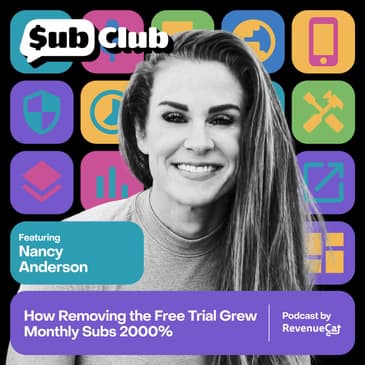
On the podcast: why authentic founder-led content outperforms, tapping into HSA payments to unlock a whole new audience, and the growth lever no dashboard can measure.
Top Takeaways:
🗣️ Authentic founder-led content consistently outperforms manufactured UGC
Real expertise and genuine personality compound over time in a way no UGC agency can replicate — and it shows up in your conversion metrics.
🏥 HSA payments can open your app to a whole new paying audience
Accepting pre-tax HSA dollars at checkout effectively gives eligible users a 30–40% discount — and targets people who already see your app as a health investment, not a discretionary spend.
📊 The growth lever no dashboard can measure is trust
You can't A/B test trust, but you can see it in every downstream metric — trial conversion, retention, word-of-mouth. The apps that invest in it consistently outperform benchmarks across the board.
🧪 Removing the free trial can dramatically increase paid monthly subscriptions
If your audience already trusts you, a free trial is just a delay. Removing it from a monthly plan can force high-intent users to commit — and the results can be dramatic.
🏗️ Consolidating multiple apps into one ecosystem reduces user confusion and increases LTV
A portfolio of niche apps sounds smart but usually just creates decision fatigue. One cohesive ecosystem lets you go deeper, price lower, and keep users longer.
About Nancy Anderson:
🚀 Founder & Business Owner of Natal, Birth Recovery Center, Nancy Anderson Fit, & Move Your Bump, digital health and fitness platforms supporting a global community of hundreds of thousands of women each month through pregnancy, postpartum recovery, and long-term strength.
👋 LinkedIn
💪 Website
📱 Instagram
📱TikTok
Follow us on X:
David Barnard - @drbarnard
Jacob Eiting - @jeiting
RevenueCat - @RevenueCat
SubClub - @SubClubHQ
Episode Highlights:
[0:00] Fitness is expensive; HSA payments make programs more accessible.
[1:36] Identified a gap: limited science-based programs for pre/postnatal women.
[2:38] Shifted from in-person to online coaching, keeping high-touch engagement.
[4:20] First online challenge: 100 participants, before-and-after results drove organic growth.
[5:51] Lessons from multiple apps; pivot to a single custom ecosystem.
[6:53] Founder-led growth: build trust before selling.
[9:30] Audience quality over follower count; engagement drives retention.
[11:39] Treating online clients like real-life clients strengthens the connection.
[14:50] Authentic, relatable content strategy.
[18:52] Real coaches respond to all DMs, comments, and emails within 24 hours.
[22:06] Soft selling drives high trial conversion and app downloads.
[27:01] Prioritize long-term trust over short-term revenue.
[30:27] User feedback informs product roadmap; App Rehab program launched.
[36:08] Consolidated four apps into one to reduce decision fatigue.
[38:45] HSA integration opens access for new audiences.
[46:47] Onboarding logic: phase-specific content improves activation.
[48:57] In-app community boosts early engagement and retention.
[50:15] Posture assessment acts as an organic “lead magnet.”
[51:23] Avoid free workouts to maintain perceived program value.
[53:43] HSA simplifies pre-tax payments and incentivizes subscriptions.
[59:15] Closing: trust-first, founder-led growth is sustainable for niche apps
David Barnard:
Welcome to the Sub Club Podcast, a show dedicated to the best practices for building and growing app businesses. We sit down with the entrepreneurs, investors, and builders behind the most successful apps in the world to learn from their successes and failures. Sub Club is brought to you by RevenueCat. Thousands of the world's best apps trust RevenueCat to power in app purchases, manage customers, and grow revenue across iOS, Android, and the web. You can learn more at revenuecat.com. Let's get into the show.
Hello, I'm your host, David Barnard. My guest today is Nancy Anderson, founder of Natal, a fitness app for women. On the podcast, I talk with Nancy about why authentic founder-led content outperforms, tapping into HSA payments to unlock a whole new audience. And the growth lever, no dashboard can measure.
Hey, Nancy, thanks so much for joining me on the podcast today.
Nancy Anderson:
Thank you for having me. We've been looking forward to it.
David Barnard:
It's super fun to have you in person. We are at the MAU conference in Vegas in a little podcast studio just off the Strip. I always love doing these in person because it's just so much fun having a human here instead of the Zoom box.
Nancy Anderson:
Face to face, in the flesh.
David Barnard:
Yes. It's great. Thank you for making the time, and we're really excited to chat today.
Nancy Anderson:
Yeah, I'm stoked. Yeah.
David Barnard:
All right. I wanted to kick things off with your origin story, we don't always dig into the origin story of apps, and try and jump right to some tactical stuff. I think you have a really interesting origin story that really relates to how you've built your business, and so I did want to start there. What's your background? And then what led you to build apps?
Nancy Anderson:
Yeah. I'm in the fitness industry by trade. I started, when I was 18, working in gyms, and I realized very early on that I wanted to be in the fitness industry, but I didn't really know how I was going to make a living in the fitness industry. I think I Googled like, "How much does a trainer make?" when I was first thinking about it-
David Barnard:
Not much.
Nancy Anderson:
... and the average was like $18,000 a year, and I was like, "Not great, but I'm going to figure something out." But yeah, I started in-person working with mostly women, but gen pop, one-on-one, and I did a lot of group training, a lot of big classes, worked for group fitness studios and did that for a very long time. And the type of trainer I was was really just I really like to connect with people in person, figure out what motivated them, what built their confidence, what they needed, what resonated, and then most importantly, what kept them committed and coming back over time.
So for 10 years, plus years, that's all I did, in person, full book, locally. I did it in Baltimore, which is where I started, and then moved to California and built a new book in California. And then over time, I started realizing, actually early in my 20s, that there was this big gap in the market. A lot of women that were starting to get pregnant or were thinking about pregnancy or rehabbing post pregnancy or getting back into fitness after having a baby were having all these issues and symptoms, and there really wasn't any support for them. There wasn't really any programs out there that were doing it well based off of science. There was a lot of fear and misinformation that was out there. And I realized way before I even thought about having kids myself that I wanted to serve this population.
My goal's always been... I wanted to go in the fitness industry, but not just to make a living and to do whatever, but really add something to the industry where I felt like when I was done in my career, it was leaving the industry a little bit better than I found it. That's always kind of been my goal, I guess.
David Barnard:
I like that.
Nancy Anderson:
And I just was gravitated towards that niche, that population of pre and postnatal. They don't really have what everyone else has, like gen pop. All the options that gen pop has for fitness, it's like pre and postnatal don't have that, and what they did have was so outdated and misinformation and was not even following the science. I started working with them more and more, still gen pop though. And then eventually I went to working with only really with moms mostly, and then I wanted to go online. I started with digital programs online first, and I still had my full book in person, so I was basically doing both.
David Barnard:
Did you start first as an... Did you start posting fitness content and that started to grow, or you started right away with courses?
Nancy Anderson:
Yeah, I think I had like 5,000 followers on Instagram when I started my business online, and it was all high school friends, college friends, and then just people from the community that knew me through fitness, through my gym, or training with me, or friends, whatever, and I would post fitness quotes. Back then, you just had still images, and you were posting motivational workout Wednesday stuff. Yeah, it just went small. But what I did when I first launched my first digital program, just because I had done it so much in person, I was like, "I want to get a group together to do this together." Group training, there's just like a momentum behind getting a community active and engage with each other in any capacity, and I thought, "Well, I do this in person all the time. I run challenges in the gym, and I do group training." I saw it in my classes. It's this family mentality like, "Why can't I create that online? I think I can."
So then I launched a challenge for my first digital program that I launched, and I had 100 people sign up.
David Barnard:
Very cool.
Nancy Anderson:
I was like, "Wow, that's so many people." Immediately, I was like, "I need to capture before and afters. Day 1, take your picture. Day 30, send it in. Whoever wins a challenge, wins X, Y, and Z." I forget what I did, 100 bucks, or whatever it was. I had like 50 people complete it and submit these before and afters that were incredible. They had amazing transformations, and I coached them every day online in Facebook groups. I was coaching in Facebook groups back then, not in an app.
And then that just kind of snowballed. I was like, "Okay." I did that in January. I thought, "New Year's resolution, that'd be a good time to launch this," and then it went so well. I was like, "Let me try again in February." And in February, I had 125 sign up, and I was like, "Oh, okay, I'm going to do it again in March." And then it just kind of like snowballed. The before and afters, I used as marketing obviously, but just all organic to 5,000 followers, nothing paid, nothing sponsored. I don't even know of Instagram brand ads, honestly, back then. You know what I mean?
David Barnard:
Yeah.
Nancy Anderson:
It was like 10 years ago. So it kind of snowballed into that. I did more programs, more challenges, and I was just in Facebook coaching them. I was coaching them, only me, party of one. No one else was working for me at that time. And it just gradually grew, word of mouth, they told their friends about it, "I had a good experience." It was no ads for years. I didn't do anything paid, no paid media, I mean. And then after I did the digital program thing for a while, then I went into launching white-label apps. So then I had a few different apps, actually four, to be honest with you, which, in hindsight, mistake. I shouldn't have done that. That was a lesson. I should have just done one from the beginning.
David Barnard:
We've had a lot of conversations about portfolios and struggles with the multiple apps, and it's a lot to maintain.
Nancy Anderson:
It's a lot to maintain.
David Barnard:
It's a lot to drive people to all the different apps, and you think you can cross sell, but it's actually really hard.
Nancy Anderson:
Hard.
David Barnard:
Yeah.
Nancy Anderson:
It's really hard. And it's confusing for the user, which creates kind of like decision fatigue, and they're like, "I don't know which app to go to. What do I do?" So yeah.
So then I did white-label apps. And then eventually, a little over a year ago, we finally launched our first custom fitness application, which is one ecosystem that everything else lives into. Those other apps still live, and we still service them, and there's clients on those apps that we still coach every day, but we're just not actively investing on growing those anymore. We're just kind of servicing them as they are and maintaining them. And then Natal, which is our custom application we launched about a year and a half ago, and that's kind of was the evolution. Through that time period, my following on social media, TikTok, Instagram, Facebook, whatever, grew and grew and grew. A few years in, we started doing paid ads, which killed it out of the gate for a couple years until they did that big update, which kind of hamstrung everyone.
David Barnard:
Oh, ATT?
Nancy Anderson:
Yeah.
David Barnard:
App tracking transparency?
Nancy Anderson:
The big Apple one?
David Barnard:
Yeah.
Nancy Anderson:
Yeah. Hindsight's 20/20, but I wish I would have invested so much more before they did that, but... I would have been further ahead, but yeah. And then a little over a year ago, we launched our custom application, so now we're just focusing on growing and scaling and really just pouring our hearts into that.
David Barnard:
Yeah. So I know a ton of fitness influencers sell courses, end up building apps, and it's intermeshed depending on their audience and stuff, but it sounds like you kind of had an edge and figured that out early.
Nancy Anderson:
Yeah. I mean, it's funny because everyone kind of calls me a fitness influencer, but I've never really viewed myself as a fitness influencer. I just think that I'm a trainer, an entrepreneur, but I'm starting to accept that that's just the label that I sort of live under, fitness influencer. But a lot of times, the fitness influencer to me kind of represents someone who looked really fit or got themselves really fit, and then they developed a program, and now they're going to help other people get fit. That was never my trajectory. I have a master's degree in kinesiology. I've been in the industry for 20 years. I started out training people one-on-one and in person for 10 years. I saw hundreds of people, train them every week. You know what I mean? They have different bodies, different goals, different motivational types.
When I went online, in the beginning, everyone was starting to do sponsored posts. This was before you even had to disclose that you could do sponsored posts. You could post anything, and you didn't know if they were getting paid. They were making bank. I mean, I have paid influencers to post for us, and we pay them a lot of money. So I knew how much money was available, but for me I just could never really make that leap to putting someone else's brand out there instead of my own because I feel it kind of dilutes your audience. But something that I also found was really interesting was that the quality of the audience is actually what matters the most.
When I was starting out, I was just writing my challenges and kind of growing, and I would look at peers, other fitness influencers that had much bigger followings than me. I had a friend who had like 30,000 followers, and then his girlfriend had like 300,000 followers. I remember I would see her, and she looked so fit in her workouts, she looked beautiful and had great form, and I was just like, "Man, she must be killing it. She must just be just selling so many programs and have such a demand for her training online." I found out that actually she couldn't sell anything. She was trying to promote one-on-one training and programs that she was releasing, and no one was buying anything. She had 300,000 followers, and actually she had a big sort of endorsement deal, I guess, from this fitness clothing brand that would pay her to post a certain amount every month, and then she would get kind of this lump sum every month, but she couldn't sell any programs.
At the time, I think I had like 10,000 followers maybe on Instagram and Facebook combined, and I was doing like 10,000 a month in sales, and it was just a party of one, just me and Shopify and running Facebook groups-
David Barnard:
PDFs.
Nancy Anderson:
And PDFs, yeah, exactly. And that was such a big lesson for me because I was so hard on myself of like, "I have to make it to this number of a following to be able to be successful," or whatever. Really, I realized, at 10,000 followers, I was already succeeding more. But the difference, in my opinion, was not just the quality of audience that she built. I'm not sure how people get their audience. Sometimes it's like a quick viral whatever, and then you just have this audience, but they don't really know you, they're not really engaged.
But the way I nurture the relationship with my clients, I treat them like their friends and family. I treat them like they were with my clients in real life, which I was invited to my client's weddings and I would go to their house for dinner and we go out together and it's like we really have a real connection and I love them. I think of my audience online in the same way. And I think that when you have that mindset going into building an audience, people can feel that you genuinely care and you really want to connect, and that kind of sets us apart.
And then the other thing is there's so many fitness influencers that they look amazing and maybe they were so good at training themselves and giving themselves a specific body. But when you don't have practical experience or real education in the field, it's really hard to make an effective program to scale for the masses because everybody is different, people are motivated differently, people are going to hit different plateaus, different things are going to go on different people. You can't train everyone the same. And when your only deal story is yourself, "Well, I lost this weight, and I did this thing," that kind of is like, "Yeah, but are you going to be able to give results to everyone? Because you only have this sliver of experience where..." Luckily, before I went online, I had 10 years of experience and a master's degree and all these certifications that gave me, I think, the ability to not only build a real connection with my audience, but also deliver programs that deliver real results that lasted.
And then that, once you have both of those things, that kind of just snowballs because people want to share their success with their own network and their own communities, whether it's big or smaller or it's just in person. Over the years, the biggest compliment that I receive when people come up in public and be like, "Oh, my god, I used your program. Thank you so much." They often say like, "I tell all my friends about your program," and to me that's just such a good sign that we're doing things right. If someone cares and had a good enough experience to tell people in their real life about your product, it's like that is a major sign that you're doing something right. So, yeah.
David Barnard:
How have you seen the audience building shift with the move to more algorithmic-driven content? Fewer of your followers will actually see every post of yours. Reels, TikTok, so many of the platforms now are more algorithmically-driven. But it sounds like if you actually built a good audience, the audience still sees a lot of your content, right?
Nancy Anderson:
Yeah. I mean, I think it depends on the platform for sure, but let's talk about Instagram, I guess. That's an easy one to reference.
David Barnard:
Yeah.
Nancy Anderson:
For me, my audience is so engaged that they want to come watch stories. If my story views are 50,000 views, they're all my followers. Very rarely am I getting non-followers that are viewing my stories, but my story numbers are high, and that's where a lot of the intimate interactions happen where maybe you wouldn't even see it on the outside. I'm in DMs every day, chatting with people. My coaches, customer service are in, business manager chatting with people and connecting with them. I think a lot of it happens there. So even if they don't see my post on the feed, they're seeing my stories and they're engaging with me in DMs. But also, I try to... For me, I don't always just post about products. Because I notice when you post only about product, you don't perform well on the outcome.
And then you have to try to achieve the system, which I just can't get behind the excessive Manychat stuff. I just can't get behind that. It just feels so inauthentic to me. Or having this Instagram groups where you're like... They had label on different things like, "I fit club. Join my fit club." And then you have 20,000 in your fit club. So when every time you post, you send it there and you're like, "Go comment, and then I'll send you $500, one winner." I just can't get behind that. You know what I mean? I just try to keep it authentic, and one thing that I do personally is I post content that I know is relatable and funny and engaging or entertaining to my target audience, which is going to be my following, but also it could be other people that aren't following me.
So I'll post some viral ideas that I know moms will be able to relate to. Something funny happened in motherhood where I'm like, "I think people will get a laugh out of this. I'm going to share it." Or my husband will do something stupid, I'm like, "I'm going to clip this from our home cameras and put it up," because I think it's relatable. It lets people get to know me, the founder. My whole strategy is founder-led growth, so I want them to get to know me. I want them to feel safe with me and like I'm one of their friends. And I think if you read through our comment sections, you get that vibe too. They talk to me like I'm their friend and I talk to them like they're my friend, because they are in a parasocial relationship.
So I think that's one way to kind of navigate it is like don't only post about your product. You don't have to be so business. You're allowed to have a voice, and you're allowed to have personality, and you're allowed to be vulnerable with your audience. It doesn't have to be this professional living in this box and I only talk about expert-led things. I want to connect with them, and that connection goes far beyond fitness. So I think that's part of how I navigate that.
David Barnard:
Yeah. Yeah, it makes a lot of sense. And I would imagine having such an authentic, engaged audience does give good signals to the algorithm so that some of your one-off posts do end up getting a lot of attention and a lot more reach than they otherwise would.
Nancy Anderson:
Yeah, it totally does. We did an audit recently, which I never knew these numbers until recently. We did an audit, and it turns out our organic content outperforms our competitors by 90%-
David Barnard:
Geez.
Nancy Anderson:
... which I was like... I knew it was better, but I didn't realize it was that high, and I was like, "Okay, yeah, that makes me feel really good about my mentality around this whole strategy that I have."
David Barnard:
Yeah, and it really is such a different strategy than a lot of people are working on right now. Not that those others are invalid, they work, and they work for different kind of businesses. I was excited to have you on with this mindset because I think it is a great way to build a great business with this mindset of building trust, building an audience who really cares, engaging directly. So many of the things you do let you outperform in that way. The other organic content that you're outperforming is their manufactured UGC team that's doing stuff, and that can work, but being a real person, real... like you were saying, all the experience and everything else you have comes across differently in a way that's more authentic, that's more relatable, more trust-building, and stuff like that.
Nancy Anderson:
Yeah. I mean, my kind of philosophy is like, "I never want my audience to feel like I'm selling to them," I mean, even my own app. I just want them to know what I do, and that I'm an expert at this, and if they ever need me, "I'm here, and I would love to help you." That is what I want them to feel when they consume our content, when they talk to me. I'm never in DMs pushing stuff. If they're asking me a direct question, of course I'm going to share our product and I'm going to say, "Hey, here's the link if you want to check it out," and I train our customer service team to never hard sell.
In fact, I hired recently. I've tried to hire so many people to help us with content production over the years, and it just doesn't really work. I have a very specific brand voice that we have to nail. Words really matter, especially in emotionally sensitive topics or niches, like pre and postpartum fitness and health. And healthcare in general, I think, it's a very sensitive area, so you have to be careful with what words you use and what you say. But yeah, I'm just super picky with it.
But recently, we are trying something new, we're bringing them on and I'm trying to get them to understand the brand voice. They're sending over these scripts to review and I'm like... I'm like, "Every word in this..." and he's like, "Okay, so what I'm hearing here is you never want to sell, you never want any copy that's going to sell," and I'm like, "Pretty much, yes." "And at the end, you just want to end it with a soft sell, like, 'Click here to learn more,' like, 'DM me to chat.'" That's what I want. I just want the connection first because I want people, before they get to the paywall, before they're asked to start a trial or even asked to sign up, I want them to know who we are, to feel comfortable with us, to feel safe with us, to feel that we're credible. And in order to have her feel those things, we need to connect with her. We need to build rapport. We need to have responsiveness.
I think that this is crazy, but I don't think that a lot of brands do it, but this is just... I mean, maybe it's my niche, I don't know, maybe it's my personality type. But every DM and comment across all social platforms, every email, every in-app post, comment, and DM gets answered within 24 hours and has been for eight years.
David Barnard:
And by a human, not by an AI system.
Nancy Anderson:
By a human. By a human, and it's not canned responses. These are real people. And yes, we have like SOPs and workflows to make it efficient and make it scalable and make it digestible for a spend, how much it's costing us, but our clients deserve to have a human talk to them. These are women that have been ignored by their doctors or they have been not given resources to help them through a very personal phase of life. The least I can do is give them a real expert to talk to. And that's the other thing is we don't have just customer service reps. Our coaches, real-life DPTs, real-life public floor therapists, real-life trainers that have tons of practical experience or are still practicing in person are in talking to them.
David Barnard:
That's awesome.
Nancy Anderson:
That's who they're connecting with. You know what I mean? And yeah, they cost more per hour than a low-level customer service rep, but think of the value and the connection that we're building with our client before we ever even tell them that they should buy or ask them to sign up. And I just think that soft selling for us is just... My growth approach is soft selling. It really is because, in my opinion, the soft things are actually what determines whether or not someone stays. Retention is what matters. It matters more than acquisition. For me, it's like, "Why wouldn't we prioritize that?" Sure, I can't clearly measure it. I can't clearly measure how powerful it is to invest in all this trust-building and relationship-building before the paywall or before the trial or whatever. I mean, our stats kind of speak for themselves, I feel like.
When someone gets to our web checkout, 93% of them actually download the app, which is a really strong number that we recently found. I think our trial conversion rate is like 68% up against... Our industry average, I think, is 38%. So it's like stuff like that. I don't think... It's not because our offer is amazing or our checkout page is amazing or the copy of the button or the countdown timer is-
David Barnard:
And it's expensive, 25 bucks a month.
Nancy Anderson:
Yeah. I really think it's actually just a signal. Those stats are just a signal that trust has been built before the paywall. So when they get to the paywall, it's not feeling risky to them, it's not feeling scary, they're not feeling hesitant or sketchy like, "Is this legit?" They already trust us because they've already been connecting with us. Whether it's connected with our content or connecting with us on socials or in DMs or emails or wherever, they have kind of connected with us. And there's a lot of other stats that we have that kind of just go back to that same thing as like, "Yeah, it looks that good because we have a real connection with our client, and I think our brand comes through as authentic, and I think..." That's my founder led-growth approach.
David Barnard:
No, that's so awesome. Honestly, I think so much of the industry right now is trending toward short-term maximization over building long-term sustainable value, and I don't know that... And this is why I'm so excited to have you on, I don't think people think deeply about the trade off they're making. You're making a very different trade off. You could go scale with tons of UGC, and not that that's a wrong approach. You can scale quickly, you can delete your voice, you can do those things, and build a great business so I'm not saying... But there's another approach which... I just really like that mindset of really building trust. There's a quote... I'm actually in my talk tomorrow at MAU, I'm going to quote Sylvain from a podcast we did a while back and it's, "Your paywall is only as good as a story leading up to it."
Nancy Anderson:
Oh, my gosh. I have a similar... I don't have that quote. But in my speech tomorrow, I'm saying something like that.
David Barnard:
Yeah. And the truth, and what I'm going to say, is that the story begins with the TikTok video they saw.
Nancy Anderson:
100%.
David Barnard:
It begins with the Meta ad.
Nancy Anderson:
1,000%.
David Barnard:
It begins with searching prenatal in the app store, and then that story continues usually on the app store or on the web with them seeing screenshots, getting sold a little, downloading the app, and then getting to the onboarding. And the more you can pack the story ahead with trust, with relatability, with believability and all those things, by the time they get to the paywall, they're already sold. Your paywall conversion numbers are insane.
Nancy Anderson:
Thank you. Yeah, our download to trial I think is 17% against a 6% health and fitness average. It's stuff like that. We don't have any growth hacks. I mean, the hack is-
David Barnard:
Build trust.
Nancy Anderson:
Yeah, build trust. Be consistent and reliable for your audience over time, and it will pay off I believe. I find that a lot of... Even brands will do it, but a lot of times it's founder-led brands or fitness influencers are doing all these brand deals or affiliate links, and they're cashing in, and people ask me all the time, management agencies or whatever, they're like, "You're leaving a half a million dollars on a table every year or a million dollars on the table every year. If you just did brand partnerships..." and I'm like, "Yes, you're right, but that would be cashing in on my audience." That just doesn't feel right for me.
Nancy Anderson:
There's nothing wrong with it. I'm not trying to say that... It works for some people. Just for how I have built the brand and the relationship I want to have with our audience, I never want them to feel like I'm using them. I want them to lean on me. I don't want to feel like I'm leaning on them to support... Obviously, our app is not free. It costs a lot of money to build and maintain and develop all these features and stuff. So yeah, in a perfect world, everyone will give everything away for free, but I just never have felt right about doing the affiliate link thing or doing a brand partnership and hashtag ad at the end of it. I just can't trade... I just feel like over time that will dilute my brand and will dilute the trust. They look at me as so authentic and like, "Is that authentic pushing..."
Even if I use the brand, the thing is is I'll post about a brand if I love it just for free, if I think it'll help my followers and they could relate. But that's one thing that I notice a lot. And even brands partnering with other brands, and it's like, "I don't know. Is this doing what you think it's doing long term?" And I don't know how we would measure that, maybe you can't, but just my intuition and gut and everything I have seen is like, "It's not going to pay off." I want to continue to invest in our app and our audience and the results and programs we can deliver to our audience to help them and hopefully improve the offerings in the fitness industry for this population and, over time, add value to the company, not to Nancy Anderson. You know what I mean?
David Barnard:
Well, and I think the 500,000 you're leaving on the table is really an investment in that audience, an investment interest, an investment. Really, the trajectory you're on with the business, I mean, you shared with me you all grew 20% in the first quarter of this year, that kind of growth happens-
Nancy Anderson:
And we raised prices during that time, which is kind of crazy to think about.
David Barnard:
And that happens as a snowball, and so you're snowballing that trust into a much bigger thing. Whereas if you did dilute the message, dilute the brand, dilute your messaging, dilute your audience, you could cash in on the short term, but it's probably going to be worth way more to you in the long run building that trust and leaving that money on the table. And again, that's where I think there's just...
Nancy Anderson:
And just deferring enjoyment of it, I guess. I don't really know. Are you leaving it? Maybe not. You're just rolling it into something else.
David Barnard:
Well, again, I think there's a time and place to just make hay while the sun is shining. I think again, as I said earlier, too many apps aren't taking that whole picture into account when they're making these decisions, and those decisions that ultimately do increase revenue in the short term aren't building that kind of snowball that is going to snowball. I mean, we talk about on the podcast about retention offers and it's really popular if you dismiss the paywall, then to offer 80% off, I'm like, "Those things work," but they also do kind of feel a little icky sometimes. You just have to figure out for your own business where you want to draw the line.
I love hearing from you building your business this way because it's a very conscious choice that not as many app builders are choosing that. I feel like the whole industry has pushed harder and harder and to monetize as quickly as big and move as fast as possible instead of building this long-term trust and growth engine that does pay off in the long run and really snowballs instead of just burning through users and having high churn and all those kind of things.
Nancy Anderson:
Yeah, I know. I think trust actually drives monetization personally when you think about it, but you have to be patient and you have to be okay with not being able to measure every single thing. When you're investing in trust and relationship-building with your customer, yeah, you're not going to be able to measure everything, but you'll see the downstream impact. 20% increase in ARR growth in Q1, it's like, "Okay, well, the investment seems worth it to me when you look at it like that."
David Barnard:
I know you spend a lot of time talking to users, right?
Nancy Anderson:
Yeah.
David Barnard:
Something you put in our notes was, "Dashboards can give you numbers, but talking to users tells you why." I mean, that's exactly that mindset. It's a-
Nancy Anderson:
Yeah. I mean, that's actually how our hero program got built is... It's called Ab Rehab, and it's our most popular program inside of our app that drives the most traffic to our app. At the time, we had digital programs that were launched, and I was coaching them in Facebook groups or whatever, but I was only doing postpartum core rehab, like Ab Rehab stuff, in person still because it's kind of complex. It's hands-on work. You need something kind of different for each person. So I hadn't yet figured out a way to build it into an effective scalable online program, but I kept seeing a trend come in with comments, DMs, and inside the Facebook groups that I was coaching.
It's like women were coming to me, asking about getting back into fitness postpartum, asking about symptoms that were directly related to postpartum core rehab. I realized, because I was so close to those conversations and so close to those clients, like, "Oh, this is not a one-off. This is a gap that no one is serving or they're not serving well for it to be effective. I'm going to figure out how to make this scalable." So I did, I buckled in, and I figured it out, and I launched it, and we've had over a million users use this program. Eight years ago is when I launched it, maybe a little bit longer now, and it's still our hero program. It drives the most traffic to our app. It's what we're most famous for. It's the program that most people stop me in public and talk about. It's that one. And I never would have built it if I wasn't close to the customer because I never would have heard that feedback. That never would have showed up in my Shopify reports. You know what I mean?
David Barnard:
And it doesn't show up in an A/B test. You can A/B test up and down and price and all the different things, but you're going to lose the why if you're not in that community. That's another thing I love about the business you're building too is that you're almost building a community first, and then the app is just a way to make money to build the community. There's a famous... I think it was Walt Disney, like, "I make movies to make money so I can make more movies," and it's like-
Nancy Anderson:
That's exactly right. That's exactly our approach. Before I got into fitness, I actually have an undergrad in fashion merchandising. I was in the fashion world for a little while, not really glamorous, but I was a manager at Nordstrom, and that was the first place that I worked that really had high touch customer service. You could not say thank you. You had to say, "My pleasure." You'd have to walk the bag around the counter to hand it to them. You couldn't hand it over the counter. You would have to take... Any return back, you would take it back with grace. You would never question them. You just were so respectful and honoring to the client. And that was such a good lesson to me. I'm like, "People should be treated like this." If people are coming in to buy a high-end product, I mean, ours isn't really high end, they should be treated with this kind of appreciation and respect and really feel valued and served.
That work, it didn't work out. I think I actually got fired from that job. But I did learn how important that high-end customer service was, and I took that with me, and that is what I train our team on is high-touch customer service, go the extra mile, get her the link. If she wants to know what pants I'm wearing, ask me... Think about that. I have a half a million, a million followers across social platforms and they're like, "I want to know where Nancy's necklace is from," I will find the link and send it, and it's not going to be an affiliate link. I'm just sharing it to share it. You know what I mean? I'll tell you the brand of whatever.
Even it has nothing to do with my product, I will take care of her because I want her to know that I care about her and I value... I mean, people have a lot of choices. They can follow any fitness influencer they want. But if they choose to follow me and be a part of our community and engage or use our products, I want her to feel valued and seen and heard, and if I can do a small part by just answering a DM. It's crazy to me that brands don't answer their DMs or answer anything in their comment section, or they just like it and they don't actually reply. I'm like, "These are people that took time out of their life to ask you a question about your product even, and you're not answering it, or about something else. Or they're just trying to connect with you, and you just ghost them?" It's like, "Talk about leaving money on the table, honey." To me, that is leaving opportunity on the table.
David Barnard:
Yeah, absolutely. I do want to step back. You talked about having four apps across different things and then niching down. And something like we've been talking a lot about at RevenueCat and then just in the industry more broadly is that, with vibe coding and the ability to build more quickly, there is an opportunity to very deeply serve a smaller niche and do really well. And it sounds like that's kind of the path you were on, trying to serve a lot of different needs, but then by niching down is when you really saw the growth. How did that all come together?
Nancy Anderson:
Yeah. I mean, we had basically four apps. We had a pregnancy app, a post-pregnancy app. We had a general population fitness app. And then we had a Nancy Anderson Fit app, which was basically for... If you fit in none of those buckets, but you want my nutrition programs or you want whatever, whatever, and you don't want to see postpartum content, you can go Nancy Anderson Fit app. It's so much, and what we found is clients want to be in all of it. And I don't know, it's just so intuitive now. I don't know why. I feel like I'm so good with intuition usually, but in hindsight it's like, "Duh." But someone that's working out in your pregnancy app and then she doesn't want to leave that app to go to another app to do post pregnancy and then leave that app to go to another app to do gen pop, it's like it should just all be in one ecosystem. So we kind of made that mistake.
I also realized that, in general population, there's so much competition, which I think if we tried really hard we could compete. But I'm only one person and it's a founder-led brand and I'm so picky about how the customers are taken care of and how our brand is perceived and what we put out there that I just wanted to be too involved to be able to actually scale four apps. It's just crazy. We actually had two other apps scoped that we didn't even... I went to Max, my husband, I'm like, "I can't do it. We have to tell them no. We can't do it." I have to draw a line somewhere. So yeah, it was really that. It was just realizing that everyone really just wanted one ecosystem where they could just stay in for longer. And by doing that, we could actually lower the price. So we could not only give them more content in one place, we could do it at a lower price, which just created more value for them really.
David Barnard:
And then the name speaks to the niche. You've niched down on Natal, so prenatal, postnatal. And then I imagine that resonates so much more, it's like, "This is the fitness app for me because I'm going to have a baby. This is the fitness app for me because I just had a baby," and that tells a difference. We were talking about storytelling, the name of the app tells a story that that's who you care about, that's the community you're building, and that's what you're working toward, and that's what you're going to get when you download the app versus if you're a gen pop, Nancy Anderson Fitness app, it's like, "What is that? I don't know who Nancy is." But Natal, it's like, "Oh.." yeah.
Nancy Anderson:
Yeah, and that's actually one, I think, mistake I did make early on is... Nancy Anderson Fit was the brand for a long time, and that's tough. In hindsight, I probably wouldn't have spent so much time building a brand with my name across it. I would have had another name, like Natal, for example. So that's kind of been a soft pivot that we're trying to sort of make because I have 10 probably coaches, amazing, talented, very experienced coaches, DPTs, physical therapists working for me too, so it's not the Nancy show. You come in and maybe you're getting coached by Lindsay or Brittany or Athea or these other coaches that work for us who are incredible. I also didn't want to keep using my name because, one, I just don't want to be the face of the brand forever, because there's other faces and I want them to shine too, which, talk about like UGC...
I have my coaches create content for us, which I think is a way to do UGC without making it kind of that diluted way of doing it. We scope ideas from my coaches, and they shoot those, and that's been something that we're trying out, working well.
David Barnard:
It maintains that authenticity because they were experienced, they know the-
Nancy Anderson:
I know the clients, the clients know them, so it's very authentic, I think. But yeah, that would be one lesson I definitely... If I could start over and do it, I wouldn't have done Nancy Anderson Fit app. But yeah, I would have had a different name than I would have done. But yeah, pre and postnatal is what we niche down to because that's really where I think we can make the biggest change, the biggest mark, I can leave the biggest improvement on the industry there. But I love it all. I can train anyone, men, women, whatever, but I niche down to pre and postnatal because I think that that population is most underserved. The biggest demand is there for us, and we have the expertise and the experience to fill the gaps. So I want to do that for the industry.
David Barnard:
Yeah. Yeah, and I'm excited to see more and more apps launched that take that approach. It's like, "Yeah, there's hundreds of fitness apps out there, and so many of them are trying to be a massive business and so then they have to reach everybody. But then when you reach everybody, you're just competing against everybody else too."
Nancy Anderson:
It's very difficult.
David Barnard:
So yeah, I'm excited to see all the different apps that get built over the next few years as it's gotten easier to build apps. I imagine you all have struggled maintaining four different apps and you're white labeling and... I imagine that's going to-
Nancy Anderson:
White labeling is tough, yeah, because you're so hamstrung by the software that you get. You know what I mean? So it's been nice to have a custom app where we can basically kind of do and build anything that we want. But Max was actually talking about this earlier today. We were talking about how inexpensive it is to build an app now. As opposed to 10 years ago, it would've cost so much money. The barrier to entry to build an app is like so low now. Basically, anyone can do it. Anyone that... yeah.
David Barnard:
I'm vibe coding an app right now, and it's crazy how much I can get done.
Nancy Anderson:
Yeah, which is awesome, right?
David Barnard:
Yeah.
Nancy Anderson:
Because it gives us even playing field to so many more people. But I think what we'll find is as the barrier of entry is lower and how it's less expensive to create these apps, there's so much competition in this space, so much noise in the space. What's going to set your app apart from the rest? And that's where I think the community and the branding piece comes into it and the practical experience, which is kind of for the fitness industry specifically. Because you look at these big brands, Under Armour is a great example, they just have built this reputation for themselves that kind of carries, but they're... I mean, I love Under Armour. I used to work there, so I don't want to say anything bad. But if their products aren't as good as their marketing, it only works for so long. I think if you look at like the stock market for them, you can see that they've had a big challenge. So that's just another example.
I always try to like learn from other brands' mistakes. I try not to make all the mistakes myself, so I can only look out and like, "What can I learn from other people that I don't have to go through that same thing?" But I think that's a good example of your brand can be really strong and your product can be weak, that's going to fizz out eventually. Or your products can be strong, but your branding's really weak, and that kind of is hard too. You kind of have to have both, have a really good product but also have really good branding and a strong connection with your target audience. And I think that will give you the most longevity for growth over time.
David Barnard:
I love what you said there because... It's really bringing it back to something we've... It's been a thread throughout this whole conversation is storytelling is that... You said something along the lines of like, "If you're going to build an app, why? Why will people care?" And that's the story. What's the story behind it? And so if you're building a new app, if you're adding features to your existing app, what's the story behind? What does it matter? Why will it matter to people? And you really need to think through that deeply. And that's how you've built your whole business, is that you actually started with the story, and the app is just the culmination of the story that you were already building and already telling, which is really cool.
Nancy Anderson:
Yeah, 100%. The insights really have to come from the customer. We're really just building what she wants. She's telling us the product roadmap, not me. And I think that if you have close proximity to your user, it's so much easier to map out your product roadmap and know what features to build. I mean, the last thing you want to do is spend 50 grand building a feature no one uses. So it's like when you can hear from your audience like, "Oh, there's a real pain point here. What can we do in the app to fix this?"
One that we've done recently is a posture assessment where they can come in and get their posture analyzed by an expert, real person, not AI, and it tells them what they need to work on and then gives them that first activation steps like, "Okay, this is the program to start on. These are the custom routines to add in based off of what we found in your posture assessment." We found that when women come in and do that, they're... 68 or 70% of them go in and complete their first workout after that, which is like a really high... I think that's high.
David Barnard:
That's really high. Yeah.
Nancy Anderson:
So it's things like that where it's like we knew that they would probably benefit from this, just from all the conversations we've had with the user. And, you know. Part of it also, in the fitness industry, is waiting for people to be ready for certain things. For a long time, there was a huge fear around pregnancy fitness, so people didn't want to work out because they were scared. So it was this whole educational period of time where we're just educating on the science, "It's safe. It's beneficial. It's going to help your baby. It's going to help you. It's going to help your recovery." And then people learn, and then they're kind of ready for it. It's like the wave is coming.
The posture assessment's kind of one of those things, and that's just been one of the activation pieces that we're currently working on. Because that's one thing that we are struggling with, probably we need to work on the most, is getting more wins for them earlier, getting them in to complete the first workout earlier to get them seeing... Once they complete the first workout, then they feel a difference, and they see how it's going to go, and they're more likely to come back. It's like getting that first hurdle.
David Barnard:
How do you approach that in onboarding and that early storytelling? Since you do work prenatal, postnatal, posture, like all these other things, do you have a branching logic where you ask a lot of questions early on and then you take the onboarding a different direction and they end up at a different paywall? Or is a posture assessment part of onboarding now for the right person, or is it just a web thing or... Yeah, how are you approaching... Even though you're in the niche, you are serving so many different needs, and that gets complex and then leads to confusion and decision fatigue. Even in a single app because you do so much, it can have similar kind of decision fatigue as having four different apps. How are you thinking about approaching all that and simplifying it for the user?
Nancy Anderson:
Yeah. I mean, one thing that we definitely see is when women come in and they're overwhelmed or confused of where to start, they don't start. They have this decision fatigue. They're like, "Well, I actually could probably... I think I could do all four of these programs. Which one do I do?" So we try to help them not have that decision fatigue when they come in. When they go through onboarding, we don't have a super long onboarding. I think it's probably 10 slides, 10 questions maybe, maybe 15.
David Barnard:
That's one of the many contrarian things about your app because most fitness apps still-
Nancy Anderson:
Because moms don't have time for that.
David Barnard:
No, it's-
Nancy Anderson:
They don't.
David Barnard:
You know your audience.
Nancy Anderson:
They don't want to waste time filling out all of these things. We ask them what we need to ask them and we're actually... This is a big project we're working on right now because we do need to optimize it in certain areas that I think we can improve, but we have split the app. So you come in through onboarding and you tell us, are you trying to conceive? Are you currently pregnant? Are you postpartum? Have you ever had a baby before? And based off of that answer, the content that's populated in your app once you get in there is completely different. So if you're pregnant, you're not seeing any postpartum content. If you're a TTC, you're not seeing any pregnant content. It is only for your phase of motherhood is what we call it. So that's a big piece that slices it down. I have 50 programs, and now only you have 15 or something. It's a big slice down.
But then throughout, we're asking about symptoms they're having, goals they're having, how much time do they have to work out, those kind of things that help us recommend the right programs for them to get started. The posture assessment is only for postpartum right now because we just launched it a couple months ago. We will roll it out to everyone else eventually. That kind of goes hand in hand with you had a baby, you're trying to rehab your body, not like, "I'm coming in to like gain muscle and strength, and I'm done rehabbing," kind of thing. It's more of an earlier postpartum thing. So based off of when you gave birth last, we'll give you the posture assessment kind of thing.
David Barnard:
Got you.
Nancy Anderson:
So yeah, we kind of filter it down like that. We have found that too many onboarding questions, people can't get through it and they just get frustrated and, not enough, they're confused when they get in there, they don't know where to start. It's this constant balance of how much... So we're kind of playing with that right now. We're adding a few more slides that kind of niche down a little bit more of where to put them because we don't want people being confused when they get in the app, but we also are reaching out to them. As soon as they get into the app, a real person is reaching out to them like, "Hey, just shooting a DM. Welcome to the app. Let me know what I can help you find." And at first, if they connect with a coach or they go into our community and connect, we find through our stats that they're more likely to come back.
In our in-app community, if they get in there, 31% of them are coming back on day 2 and 14% are still returning by day 3. You know what I mean? What we find is it's not really the feature, it's just an in-app community, something special, but I think it's the validation, the support, the feeling of like, "Oh, I'm not alone here." There's expert coaches in there that are coaching all day, every day, answering your questions, pelvic floor questions, whatever you need. Complex things that you'd have to pay a couple hundred dollars for a session with a doctor of physical therapy to even get your answers, well, we're answering them in the community. "Oh, by the way, it's for free. You can come in, anyone can ask those questions for us." So it's like that and helping them kind of get to where they need to be through the community or through coaching or connecting with the coach, even if-
David Barnard:
Yeah. And then I would imagine that's part of why you have such great conversion to paid is because you get people to that moment of feeling heard and understood and that they're seeing the right content so that they'd start a program instead of being overwhelmed by 10 different programs. So it sounds like that is pretty key to why you see the numbers you do. And then when they feel engaged and cared for and listened to and supported and related to and all those things, then retention is so much easier because they feel part of something instead of like... less transactional even.
Another thing I was curious about, with the posture thing specifically, but feel free to use any other example, how do you think about individual features as kind of lead magnets? You probably would never say lead magnet.
Nancy Anderson:
Yeah, but I know what you mean.
David Barnard:
The posture assessment is a kind of thing I could see a Facebook ad, and you do run some paid ads and everything. So then how are you thinking about specific features as those kind of draw and something exciting that an ad could be... Are you thinking even in that way, or is it just like how can we...
Nancy Anderson:
Yeah, we actually released the posture assessment to be free, so you can download the app and you can just do it for free. You don't have to be on a trial or anything to use it, but we don't promote it. It's kind of just a soft launch that we kind of threw out there. Because sometimes if we get inundated, it's actually real humans. It's our real coaches that are doing it. So I don't want to overwhelm them necessarily because we have that 24-hour role, they have to get responded to within 24 hours.
But yeah, we think about it all the time. It's funny because, we talk about lead magnets and stuff, we as a brand, I've never done lead magnets. I don't post free workouts, and it's not because I don't want to give anything away for free. It's because I think it attracts the wrong type of audience personally, I found, and I think that... The work we do is really valuable and it's complex, and these are real experts that are coaching and that are developing these programs. And when you just throw something out for free, you're kind of devaluing them too in my opinion. And also, it's complex, so me giving you something for free doesn't mean it's going to fix your problem. You might need custom coaching, and that's why we want you in the app so that we can work with you and we can customize your approach. It's that high-end customer service thing. How can I give you high-end customer service if I'm just giving you a free workout on Instagram or in a blog post kind of thing? We don't typically do that.
But the posture assessment specifically, I do want to try to use as a lead magnet. We haven't built it basically in a way where they can just click and be there because it's inside of the app. That's something that we do want to explore, and I guess we could test and see if that works well. I don't know. But we do find that a lot of people use it once they get inside the app. Organically, I promote it. It does really well if I promote it on stories, but we haven't done anything paid yet for it.
David Barnard:
That sounds like an opportunity.
Nancy Anderson:
Sounds like an opportunity, yeah.
David Barnard:
Yeah, yeah. One last thing I wanted to talk to you about is accepting HSA payments, and this is something pretty new. RevenueCat, we just did an integration with a company called Flex, Ladder has rolled it out, but very few, and your app, Natal, is one of the early adopters of this, which I think is a really cool opportunity for the health and fitness industry to be able to accept HSA payments. How did that all come about?
Nancy Anderson:
Well, it's kind of interesting because, for years, people have been submitting their subscriptions to insurance and getting it covered for pre and postnatal fitness for our app. So I knew that women were looking for this because... Really, we're in fitness, but we also sort of blend into healthcare a little bit because we're doing pre and postnatal corrective exercise and some physical therapy protocols. I always wanted to implement something like this where it would be easier for them, because we always had to say, "Oh, yeah, just you pay for your subscription and then take your receipt to your insurance company. And if you have dollars, they'll cover it kind of thing." And so many clients would come to us, because I'm in DMs, so I hear it all the time like, "Hey, just so you know, my insurance covered this." I never heard one client say that it didn't get it covered.
David Barnard:
Wow.
Nancy Anderson:
So when this came up and Max brought it up in a meeting and said like, "We can do maybe..." I was like, "Yes. 100%, yes. Our clients are already doing this. They already want this. They ask us all the time if we accept it." You know what I mean? We're super excited to roll it out, and we just launched it two weeks ago, and we've had tens of thousands of revenue come through it, but we haven't announced it. People are just finding it-
David Barnard:
That is so cool.
Nancy Anderson:
... and check out and using it. But it's cool, they did a really good job. Because when you go through the checkout process, which it is long and a little bit more annoying, I guess, for the customer, but-
David Barnard:
But it's pre-tax money.
Nancy Anderson:
Pre-tax money, and it's HSA so it's so great for them.
David Barnard:
I switched my Ladder account from app store billing to HSA billing because I know the CEO and know the team and everything. I knew they were doing this, and they would talk to us about it as they were working through it, and I had to dig around and find it. So it was exactly like that, but it's so-
Nancy Anderson:
It's worth it.
David Barnard:
Yeah. It's saving whatever, 30, 40% on a subscription I would already pay. It's like even though it's a slightly bigger hurdle, there's massive incentive to pay through that method. And then you're so early, but I would hope and imagine that retention on that is even better because it's going to come out of those pre-tax dollars. It's not part of the budget that... When somebody's looking at their monthly budget... Yeah, and I would look at this. Because I don't take freebies in the app industry, and so my wife's on Ladder for $30 a month, I was on Ladder for $30 a month. I was thinking about the annual, which.... We should have just gotten on the annuals, but that's 170 bucks. That comes out of the budget. I see those charges every month, but the HSA, now, it's just free money that's sitting out there in my RevenueCat HSA account.
Nancy Anderson:
Yeah, and I think the customers understand what this is, like, "Okay, it's going to be a little bit maybe more painful to get through checkout, but it's worth it." But what we did is we were offering a free trial with it, but we only are offering it on our annual subscription, which I think makes a lot of sense considering. So I guess we'll see how that pays off, but I'm so glad people have found it and are using it. To me, that's just a sign that once we start promoting it or running ads around it or whatever, it's going to do very well if this many people are using it already and we haven't even said anything about it. So we're super stoked for it, and I'm so happy to be able to offer it to our clients because... I mean, fitness is expensive. It's a tough time for a lot of people right now. When something has to go, a lot of time it's fitness.
Women write me all the time, they're like, "I want to do your program so bad, but I can't afford it." I love that we can offer something that maybe it will open up our resources for a new audience that maybe couldn't afford it before. But if they have insurance, this gives them another avenue. That was another big piece of why I wanted to offer this is it's right there. So when someone says like, "Hey, I really want to use this, but I can't afford it," we can just be like, "Okay. Well, if you have HSA, you can do it through here. It's at checkout." So that's another big reason why I was immediately like, "Yes, we need to put it on the roadmap right now. Let's put it in. " I didn't realize it was super new though.
David Barnard:
Yeah, that was-
Nancy Anderson:
I thought we were finding out about it late, but I guess no.
David Barnard:
Very new, very new. I think there's been some regulatory changes. Because HSA, I mean it's all federal government and tax. It's pre-tax dollars, so they're picky about what you can spend and not spend and all that kind of stuff. I think it's just in the last couple of years that that started happening where you could use HSA. And then RevenueCat integrating it, I think we're pretty early. I hadn't heard of many other apps out there accepting HSA until Ladder signed up and we did this partnership with Flex. So yeah, I think you're actually pretty early on this journey, and it'll be interesting to see... I don't know exactly where they're drawing the lines, I think that's between the app and Flex, not between RevenueCat and the app.
Nancy Anderson:
For what it's classified in the category?
David Barnard:
For what it's classified and whether it's covered, whether it's not covered and stuff like that.
Nancy Anderson:
Yeah. For us, I think at checkout they are selecting things related to postpartum fitness. There's a diastasis recti, there's a pelvic floor exercises, there's many options for that, but I didn't see a... There's just a general fitness one I guess too.
David Barnard:
There must be. The Ladder's using it.
Nancy Anderson:
Okay, yeah.
David Barnard:
I checked it out.
Nancy Anderson:
I didn't see that on there, but that's great. I mean, it should be covered. It's how you stay healthy.
David Barnard:
And I have seen there's more... There's other programs out there. I think Truemed is one where it's like you can buy healthy foods through your HSA. The insurance companies and the US government, everybody should be incentivized to let people spend that money to make themselves more healthy, not just on the care once they're not healthy.
Nancy Anderson:
Preventative. It has to be preventative.
David Barnard:
I think it does seem like the tides are shifting, and so then hopefully more and more health and fitness and mental health and other apps... If you're in that space, you should totally check this out because, if you qualify, it potentially could be a huge unlock. So yeah, I'm fascinated by it, and it's really cool that you all started. Yeah, we'll have to follow up in a year or two and see if they retain at a higher or a lower rate and see what the conversion rates are and things like that.
Nancy Anderson:
Totally. And I think the big push for it will be end of year because those dollars don't roll over so people have to use them. So that's a great time too to push campaigns around like, "Don't lose your HSA. You can use it to do our programs or use our app," free marketing idea.
David Barnard:
Yeah, yeah, yeah. All right. Well, as I do with all guests now, I wanted to ask you three questions. The first one, what is the biggest fail of the year? We'll start with fail, and then we'll go to the biggest win. The experiment that bombed, tactic that fell apart, content that bombed, or you felt like didn't appropriately represent you brand, any fails that you learned from the last year?
Nancy Anderson:
Yeah. So it wasn't an experiment, but I think probably the biggest fail for us was just... We get a lot of feedback from clients looking for different things, so we build all these programs to fill the needs, and it's almost like too many programs where they come in and they're just like, "Okay, whoa, what program do I do?" kind of thing. Especially with postpartum fitness, obviously we do a lot of postpartum rehab, so we have multiple programs that focus on prolapse, a hypertonic pelvic floor, early postpartum, Ab Rehab, Ab Rehab Plus. So now there's five, six, seven programs centered around postpartum rehab where we were listening to the needs of everyone and building those things out. But I don't think we did a great job, like we talked about earlier with the onboarding piece of, like, "Okay, we're asking you these questions and now you need to start with this program," or wherever you need to go.
So I think that was probably our biggest fail because it just creates decision fatigue.
David Barnard:
And complexity, and-
Nancy Anderson:
And then they end up not activating. My big thing is not to just get subscribers. I want to get results and value for the people that subscribe. That's the app I'm trying to build. For me, that's like a big panic button where it's like, "Oh, my god, they don't know where to start so they're not starting. No, no, no. We have to figure this out." That's a huge initiative we're working on right now to fix that failure basically.
David Barnard:
Very cool.
Nancy Anderson:
More content isn't always, I guess the answer.
David Barnard:
Yeah, totally. So then what's your biggest win the last year, experiment, price change, anything that shifted the needle for you?
Nancy Anderson:
Yeah. This is so funny because our biggest win this year came from taking advice from your podcast.
David Barnard:
Thank you.
Nancy Anderson:
You had Zumba on, and they talked about removing the free trial from the monthly option. So we listened to that episode and we were like, "Huh, that does make sense. We should try that," and we did and it crushed.
David Barnard:
Wow.
Nancy Anderson:
I think our monthly subs went up by 2,000% and our quarterly went up by 46%, our annual went up by 21%, and it just again sort of validated again for me how much trust is being built before the paywall that then they come in, they don't even want or need a trial. They're ready to buy. And it also kind of shows you that each customer is different. Some people, they know what they want, they come in, they're ready, and they just want to commit and get started. So that was just a huge thank you to you actually for having them on and sharing that knowledge. We ran a lot of experience. We learned a lot this year. We had a lot of wins. But that one was... I was shocked that it worked personally. I was like, "That's not going to... Is that going to work?" I don't know. But it worked, and it worked really well. That's what we've continued to do, and we adapted that as a permanent offering.
Thank you.
David Barnard:
That's awesome.
Nancy Anderson:
Thank you for that.
David Barnard:
And then lastly, as a fill in the blank, growth would be easier if...
Nancy Anderson:
I could get tech bros to buy into it.
David Barnard:
What do you mean?
Nancy Anderson:
The trust, the trust piece of my founder-led growth approach. If I could get everyone in meetings that focuses on data and stats to prove and make every single decision and back up every strategy we have, if I could just have stats around how valuable trust is, then those meetings would just be so much easier and then growth would just be easier because I could prove it. Because a lot of what I talk about today, I can't black-and-white prove, right?
David Barnard:
Right. You can't run an A/B test on trust.
Nancy Anderson:
Yeah. Growth would be easier if I could though. Growth would be easier if I could. So I would say probably that. Obviously, I bring a lot of intuition and an empathic sort of vibe to how I lead the company and how I show up at work. That doesn't work well in tech. So you go to these meetings with men and women who are just so data-driven, all about analytics and spreadsheets and what's the data saying. "Well, why would we do that? We can't measure it," and it's like, "You can't measure everything in your dashboard. No everything that's important in business will be in your dashboard." For me, that has definitely been a big challenge throughout this journey because I want to do both. I want to be able to do both really well. So if we could measure trust clearly in data, that would make growth so much easier.
David Barnard:
Yeah. Well, I think that's a fantastic encapsulation of our whole conversation and a great place to wrap up. Thank you so much for joining me. This is a blast.
Nancy Anderson:
Thank you for having me. I appreciate it. It's an honor.
David Barnard:
Thanks so much for listening. If you have a minute, please leave a review in your favorite podcast player. You can also stop by chat.subclub.com to join our private community.